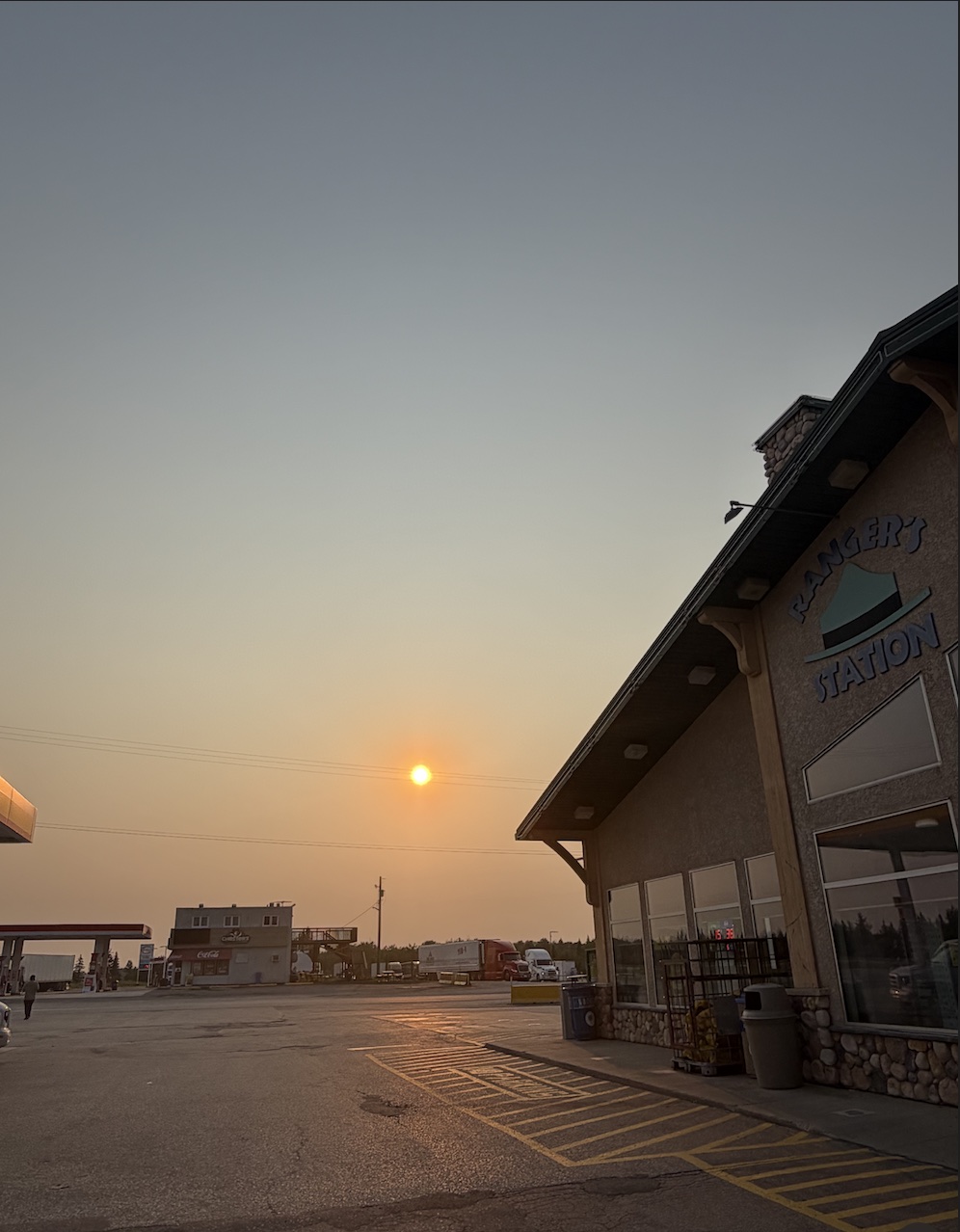
Happens Valley
Taken Too Soon: Allison Pickton, mourned by all of Happens Valley—so the opening line reads. It’s maudlin enough to make me sit up a little straighter, lean a little closer. Look for the clues between the printed words. In a photo that takes up a fifth of the newspaper’s front page, she’s judging the town’s carrot festival in front of a wall of giant, genetically modified carrots. She’s a late teenager in the photo, her hair middle parted. Behind her big smile, her braces still on, there’s a yearning as dry and all-consuming as the dust bowl. At least that’s what you’re compelled to assume, when your first impression of a stranger is the headline. When you already know the ending. The story is seven long columns across the whole front page, and despite the bland hagiography, I can’t stop reading. It’s so nakedly honest to look away: where she went to school, Happens Valley High valedictorian, outrageously talented actress.
It dawns on me, as I let the newspaper fall, that the other hotel guests must be here for her funeral. All wear modest, threadbare black suits, with jackets too large or dresses a size too small. Their line for the breakfast buffet snakes between the circular tables and approaches the entrance. Either they’re a masterclass of stern solemnity, pale faces and pursed lips like they’re playing Victorian orphans, or their crying is a different, crasser, kind of performance. Crying always gives me the same level of discomfort as accidentally seeing a neighbor naked. Why can’t they keep moving up the line, I wonder. Don’t they have a funeral to get to? I jump up and, squeezing past a large lady who clutches a small boquet of Kleenexes to her chest, swipe a yoghurt cup, and slip past the crowd. I’m almost at my table when I feel a tap on my shoulder.
The breakfast manager. She has a face that should be on the front of a syrup bottle. “I’m sorry sir,” she says, not sorry. “Why do you think you deserve the breakfast before them?”
“It’s a cup of yoghurt,” I manage.
“Camelot Inn is at full capacity today and we all have to wait our turn, so I’m going to have to ask you to put that back.”
“There’s about three spoon’s worth of yoghurt in this. That’s, like, a third of a breakfast.”
“You’ll get yours soon enough.”
She holds out her palm. People have started staring. I want to clap right back about why a place called the Camelot Inn is built like a log cabin, with animals hanging on the walls. Instead, I press the yoghurt into her hand and slink back to my seat, so embarrassed I could cry.
I unfold the newspaper as a shield from their eyes and read the words to distract myself from the hunger, now worsened by the embarrassment. So full of life, the obituary mentions in three different ways. Suicide, you can only assume. If it had been cancer, it would be her brave battle; if drugs, how she’s at peace now. Only suicide would leave a gap in the middle of the article as big as the darkness behind her smile. Weirdly reassuring to read about someone else’s wrong choices. Maybe it’s because I’m still getting over the sting of last night’s performance. Or it’s reading how Allison moved herself to the city after she graduated to pursue her dreams.
Hard city living—now we’re moving into familiar territory. I fill in the gaps the Happens Valley Courier refuses to say. Her nights that dragged on till dawn. Her long winters in an unheated apartment. There does seem to be something familiar about her face, I think. I could’ve passed her on the street, or I—
Shared a drink with her. The Renaissance Hotel. I close my eyes to better imagine it. It’s a good scene, moody, soundtracked by a Davis or Coltrane record. Here’s the rain running down the window, the wet dog smell of the old furniture. The honking outside, the murmuring inside. Allison shaking her head, sipping on her red wine: something heavy, a Cab Sav or a Merlot. Me, an unusually dry Manhattan. We’re laughing at our bad fortune, each of us stood up by our dates. Laughing because it keeps the pain at the edges.
“Are you going to have another, or…”
Normally I don’t talk to random people on the street—it’s exhausting enough to have to divulge, and that’s before they gush about their pyramid scheme—but there’s something about Allison’s pained smile that feels familiar. Knocking at something deep inside me, a memory hidden inside of a newer memory, more like a dream…
I wake up with a jolt. The newspaper, crushed on the table in the shape of my face. The people, gone. The silver dishes sealed up. Bye-bye, bacon. I get up, walk over to the manager standing at the podium by the room’s entrance, and try to keep the tremor out of my voice as I ask what the hell happened to breakfast.
Her smile is as icy as it is sweet. “Breakfast closes at ten, sweetie.”
At ten. What kind of backwater is this, I almost scream at her. She’s nattering on about how there’s nothing she can do and there’s a pancake house a few blocks away.
When I open my mouth, my voice is shaky, beaten down by hunger and exhaustion. In motels this quaint, the breakfast is really just about the only thing that makes life worth living. “It’s just it’s been so hard.”
Something melts behind her mask. “Did you know Allison well?”
She’s making assumptions about my black tee and black jeans. “…Roommate, she’s my roommate. Was. A number of years ago. When we both just moved to the city.”
“This must be hard for you.”
“She was just…so full of life.”
“Let me see if Chef can’t cook you up a little something.”
I pause. “I don’t want to impose.”
“It’s no trouble at all, on such a sad day.”
“In that case, just a couple pieces of toast, bacon, three poached eggs—and yoghurt.”
She raises an eyebrow but doesn’t protest.
When the breakfast comes, I tear into the food with my fingers, reveling in the grease and the stodge. As the hangover and the relief from the hangover descend into my stomach with the food, I ruminate on how Allison really could’ve been my roommate. Maybe there was a cheekiness in her smile, too. As if, six months after the Renaissance Hotel meet, we’re living together. I’m chugging a beer leaning up against the apartment wall while Allison curls her hair in the shattered mirror we fished out of a garbage can in the Village.
A little man in a black suit and clashing maroon tie is staring at me. Staring at me so intently as I swallow the last of my food, he seems ready to ask if he can have some.
“Sorry if this is a little forward… How did you know Allison?”
He’s not small, I realize. He just holds himself in. His spine hunched, lips pressed tight.
“She must’ve been pretty important to you if you travelled all this way,” he prompts.
“Yes we…dated for a little while.”
“Hmm. Wouldn’t say you’re her usual type.”
I’m ready to get offended by this comment until I wonder if her usual type is a Happens Valley way of saying she was gay.
I say, “We were—trying things out. Taking a break from guys, on my end.”
He twitches a smile like this makes perfect sense.
“But we stayed friends. It’s a lonely city. She had an honesty that was refreshing.”
He nods vigorously. “We fell out of touch. Sheryl and me, the split was rough, we dragged Allison into it. I don’t blame her for siding with her mom, after all my garbage, but… When you’re out of her life for so long, there aren’t any signs. It just hits you like a truck of bricks.”
Clutching my fork and knife, I keep my sympathetic smile while unease moves through me. Her dad, Christ.
“Listen,” he tenses out each word. “Since you’re going to the service anyway, you wouldn’t mind going with me?”
“Oh.”
“I’m not in the rest of the family’s good books these days, it’s hard to find the gumption on my own—we could be…”
“I actually—”
“Two peas in a pod, if it’s no bother.”
His nervous smile, though, hints he knows how much this is bothering me. Like he can see through the bullshit, the half-eaten breakfast the incriminating evidence. The more he makes you feel sorry for him, the more you can’t say no.
“Not at all,” I say.
He watches me while I finish my meal. I entertain a series of escape plans—running to my room, jumping out the bathroom window—but what, exactly, would I be running to? The only Greyhound out of here leaves at 4 PM, from a bus station in the middle of town. I have nowhere to go: daddy seems to know it.
I push the plate away from me and get up on shaky legs—shaking so hard by the time I see his big black truck, it’s hard to keep walking. If this is the beginning of a True Crime episode, I’d be the most willing victim ever.
Maybe I feel sorry for him. Maybe I want to know more about Allison.
We drive through Happens Valley. Wet, brown fields as far as the eye can see. Late March, and the snow’s mostly melted into muddy pools along the crop lines. Jack-o-lanterns and Santa Clauses coexist on wide lawns. Trucks in the driveway. Single story houses mostly dark.
He coughs. “You and Allison. You two were…actors together?”
“Well, let’s just say you move there with dreams of being the next Jack Nicholson and end up pretending to be a doctor on the internet lecturing women on their menopause.” No response. The tick-tick-tick of the speedometer. I laugh nervously. “Dean Drakeson, that’s me. You’d think with a name like that I would’ve gone somewhere, right?” He still doesn’t answer. I look out at the houses. Too dark to even make out the furniture outlines. “Failed actors get a lot of background work. That’s where I met her.”
All the air in the car seems to condense into Dad’s inhale.
Keeping my eyes on the road, I tell him a story about how me and Allison met on a big budget set. “It was a fantasy show,” and as I say it, I imagine us waiting in line for coffee. She’s dressed as a court lady, I’m scruffy and mudsplattered in peasant gear, and in front of us is a guy encased in wax: still on fire from the dragon last scene. “Everyone thought it was gonna be the next Game of Thrones. In the end, it didn’t even get renewed for a second season. Allison—Allie—had been hoping she could graduate onto a speaking part. She took everything pretty personally.”
Allison’s dad, quietly crying, clutches the steering wheel so tight his knuckles are white. “She… always wanted to be a star.”
“We both did. These days I’m a traveling marionettist.”
“A?”
“Puppets. But don’t think Sound of Music, my puppets are pretty real, if you want to know, all based on the different weirdos I met during my time in the City.” Remembering I left the puppets in my hotel room, I feel the kind of ache a mother must feel for her child. “For Tony the pigeon guy, I even managed to cut off some of his real hair! I’d met him in the park one day when he…”
But Dad’s not listening. He only wants to hear about Allison.
I sigh. “The weird thing about being an extra, right, is that you’re supposed to be a nobody. You’re literally being paid for it. When you see the final cut, you’ll be lucky to notice your shirt. But while filming, you’re not a nobody, the lead actors are the nobodies—you’re the main character. We bonded over that paradox.”
“So that means you would’ve seen her when she started to struggle.”
There’s a tiny hint of accusation in his voice. I wonder if he bears a resemblance to Allison, or ever did. If he was the type of dad to push her tricycle up the sidewalk. I say, “We drifted apart. N-not for any reason. A week becomes a few months and then it’s two years.”
“So you didn’t see her when—”
“It had been a while. A good while. But I regret it.”
And in that moment, I actually do.
“Disappearing is something people here get scared of around here,” he says with a tiny shake of his head. “Everyone’s gotten extra suspicious.”
Looking out at the fields, I think, a place like this should be covered in mist most of the time. Easy to disappear here. But I remind myself it’s not here where Allison disappeared.
Dad says, “In the end, the investigation was, what do you call it—inconclusive. The police there, they told us it was drugs that did it. Didn’t even tell us what drugs. Our Allie. Some people round here, they want to believe the story because of all the garbage I got up to. That’s bull. Allie wouldn’t. If there’s one thing me and Sheryl can agree on, it’s that.”
But, watching me in the rearview mirror, he’s begging me to confirm it. And I’ve always been good at the Meisner Technique, sensing the subtle cues my scene partner is giving off. The seatbelt tightens against my chest.
I scratch the beard bristles along my jaw and, looking out the window, say, “No yeah, Allison wouldn’t. She…”
We arrive when everyone’s already seated. Dad nods at a few of them while he crosses himself with holy water. There’s a tiny organ in the corner you’d expect a monkey to dance to. The Jesus in the stained glass has mantis-like eyes. Underneath him, Allison lies in an open coffin, extra pale but looking exactly like she’d done in the photo. Her brown hair, middle parted, fills up the coffin. I keep staring at her, taking her in. Staring even when it feels increasingly rude to. Possibly as much as half of Happens Valley has turned to take me in. Dad drags me, firmly enough, towards the nearest pew.
Clasping my hands, pretending to pray, I notice an old lady holding the Bible open, murmuring under her breath while the priest speaks. If she’s praying for Allison, does she really think it’ll do any good? She’s got a large, spotted nose and wears a black silk dress and sweater stretched over a large belly. I can’t stop staring at her, at how strange she seems. How strange everyone here seems. How strange anyone I’ve ever met now seems. I close my eyes and, feeling the sunlight warm my face, think about how we have this urge, when there’s a window, to press our faces up against it and look inside. Take note of the patterns on the tablecloth, the range of spices, the number of books in the bookshelf. Maybe everyone’s born with it, something ingrained and sapien, learning to look inside someone else’s cave to suss out danger. The urge, when you read about someone taken too soon in a smalltown newspaper, to wonder what had happened.
On the other hand, there was the time I sprained my ankle while racing to an audition. Three guys pulled me off the road before a bus could run me over. Burkina Faso, Mexico, Estonia: a proper United Nations forming to lift me up, all three laughing and chatting like old buddies. And I was so furious to be helped like that, nakedly defenseless, held up on one side by the Burkina Fasano, on the other by the Estonian, while the Mexican hailed the taxi. To be someone’s good deed for the day. I got all the way to the hospital before I felt safe enough to cry: shame filled, embarrassed tears. Getting run over, it felt like, would’ve been preferable to being that vulnerable. My days in the city were numbered after that.
Sometimes my dreams are way too crowded. It’s a big house party filled with everyone I’ve ever met: I’m outside, at the windows, waving and trying to get in. I’m not sure if this is the case with everyone, but I’m almost certain it was for Allison. It’s almost enough to know Allison.
As the priest gives his sermon, all the conversations me and Allison could’ve had bounce through my head:
“Do you really think that’s album of the year material? It’s fun but basic.”
“You realize I despise getting home when the sun’s already up? I’m telling you, we need to party more in the winter.”
Her voice is full of authority and laughter, always on the edge of a joke. For a while, we really made the most of our limited time as roomies in that old apartment.
“Now’s the time! God man, you’ve always wanted to be an actor and here’s your chance.”
“I’ll only do it if you do it with me, okay?”
It could’ve been me empowering her, or vice versa. That other life echoes through me. It’s a pastiche of different moments, most of them real, with other people—but none of those people feel as real as Allison does.
I open my right eye a sliver and see something so weird, I keep stealing glances. As the organ music plays, eight women, all different ages, all in black dresses, dance around the coffin. As each one nears Allison’s head, they reach out and touch her forehead for a long second, their own faces crumbling with grief or a twisted kind of joy, as if they’re trying to reach beyond her.
I try, and fail, to make sense of what I’m seeing. I’m also, thinking, inadvertantly, how as much as a chance encounter usually only becomes fate after the fact, only after it becomes impossible to imagine your life without it, I already know this is one of those turning moments I’ll remember for the rest of my life. Good will floods my belly. That, and an urge to get up there and give a sermon. I feel like knocking on doors or windows, feel like spreading the good news. I don’t know what that good news is, but the feeling is reason enough. For the first time in a very long time, I’m not alone.
And when I’m shuffled out the door with everyone—blinded, and feeling duped, by the unexpected early spring sun—Dad pulls a crowd of dubious people in. “This young man here knew Allison as well as anyone.”
I stutter, go through the platitudes. At what point do you tell them you were only doing this for the hotel breakfast? If I’d come clean earlier, it might’ve sounded like a joke. Here, it would only sound monstrous.
Fighting through my embarrassment and nerves, laughing nervously. “Yes—actors, that’s right, in the city. We lived together, she’s definitely not the tidiest roomie I ever…”
Ten or more people close in around me, their skepticism transforming into intruigue. The old lady who’d been praying is one of them. I try not to meet her eyes as I say, “She made our place a home. One time I came back after being out all day, Allie has gone and painted the whole kitchen purple. Purple!”
Could talking like this bring her back to life, if I make her vivid enough?
“She wasn’t doing the acting stuff to get famous. She really believed movies were your best chance at connecting with someone else. They could make you jump inside someone else’s skin.”
The whole lot of them look like regular people bounced through a hall of mirrors, the kidney bean heads, the black bean eyes. But the wonder in their eyes is growing.
I make a joke—“she was always self-conscious about her snort-laugh, it made her just snort-laugh all the harder, we called it the piggie laugh”—and the whole crowd is laughing too. My chest glows. “And you know, she was just so good.”
“What was she so good at?” says one of the older ladies that had been dancing around the coffin, the suspicion sharpening in her voice.
“Breathing.” I’d meant to tell myself, breathe, but now that the word’s out, “She was great at getting us actors to breathe. The audience, too. Reminded us we’re still humans with our feet on the ground.”
Everyone’s nodding along. All eight coffin dancers have joined the crowd, seeking from my stories what their dancing couldn’t. I’m sharing my glowing feeling with them. Each person sharing it like a secret that gets bigger as it’s passed along.
“To build community, you need someone who understands people. Who’s not just doing it for their own ego. Allie was a big personality, but she was maybe never as big a personality as when she gave the stage to others.”
I remember why I do this: becoming someone new. Becoming bigger and better than me alone.
“And listen, I know it’s hard to feel like you’re a part of something, to believe someone would call you if one day you stopped showing up. But Allie knew how to notice you. That’s why this loss feels like…”
From across the field, I lock eyes with Allison. Walking my way.
“Feels like…”
Not Allison, I realize after a second, her mom. I can tell right away, both for the similar cheekbones and the work grief has done chiseling into it.
“Flying.”
Her other daughter, arm looped in with hers, is whispering and trying to get her to change her course, but she won’t be deterred. She plants herself right outside the circle, close enough to hear my every word. I catch her eye. She nods me on. The white, straw-like hair. The dry lips. This isn’t a woman who suffers fools.
My tongue sticks to the roof of my mouth. “Allie, she…”
I can’t look away from her as she spotlights her message through me: “you’re a vampire, City boy. You’ve stopped feeling feelings so you’re trying to suck them out of us.”
Dad gives my shoulder a gentle shake. “Go on, Dean.”
Dean: he remembers my name. Actually cares enough to. And now the others will remember it too. I just need to—
Look away—
And keep talking.
“It’s a machine, the movie industry. It’s whole purpose is to build a world that seems realer than the real world. I think that’s why Allie never made it. She was too genuine. Too human.”
The accusation in Mom’s face is softening, replaced by a hope even deeper and more beseeching than Dad’s. As that hope draws me in, I get a memory of a woman dancing across the stage in a purple dress. Dancing, the way the ladies danced around her coffin.
“But you should’ve seen her, dancing up on that stage. It was a one-woman show, the Empress of Austria, about this renegade queen from a hundred years ago. She had this funny way of singing, very old timey, like Snow White, right?”
“Yes,” Mom says, shaking her head, coughs of sobs and laughter as the tears fall. “Yes exactly.”
Why did I end up in Happens Valley, why today, why am I here right now? Almost enough to make you believe someone up there is pulling my strings.
I say, “God, Allie. It didn’t matter that we didn’t know Empress Sissy or the Austro-Hungarians: she made us feel like we did. She was—”
Mom moves in and hugs me so tight it almost strangles the words out of me. Her sobs shake my chest. The whole circle closes in, sobs rising all around.
On cue, I start crying with them.
The crowd is whispering, pulling closer, now they’re sure that, whatever the show is, it’ll be a special one. I step up to the edge of the stage and let the hush close over them before speaking.
“It was about a year ago when my life changed forever—I met a girl who showed me what living really means.”
I try and focus on the crowd, thirty strong, mostly retirees, or the backdrop of desert mountains—but I find myself thinking about the end of the funeral, as I always do when I talk about Allison. The way the sister, Carly, pulled me aside after. “You know that’s not Allison, right?”
“See, Allie taught me more about how to live than anyone alive ever could,” I tell the crowd.
I’d stood with Carly by the side of the church, stunned, as she told me how Happens Valley specializes in creating bodies out of latex so real that the Industry sometimes comes there for filming particularly expansive war scenes. “That’s how Allie first got involved in the movies, we thought it only fitting.” She’d said it jokingly, almost ironically. That was the craziest part. It’s too insane a story to believe—but I believe it; Allie’s body would’ve long since decomposed.
I keep talking, the lines so well memorized, I don’t have to think about them. “A woman like Allie reminds you what life’s really about. See, Allie was an actor, but not the kind you’ll see on your screen, no. Instead of asking what can I get, it was always, what can I give, and she gave, gave all of herself…”
True to its name, Happens Valley really was the place where things really started taking off for me. A whole year later, I’ve traded the soggy March Midwest for warmer, drier locales. The crowds grow larger with every town as my reputation spreads. But still, Carly’s grimace stands out in my mind: almost a smirk, almost mischievous, like we were sharing an inside joke.
“Folks will believe any story, as long as it don’t stink.”
“Ladies and gentlemen,” I press the rim of my top hat closer to my head. “I’d like you to meet her.”
The excited murmurs that break out amongst the crowd still isn’t as loud as the squeak of the wheelchair. The more I’ve stressed over the intricacies of the set-up—a cage in the back of the stage, spring-loaded, the slight incline allowing the wheelchair to roll on its own—the more effortless the performance. Today she rolls her way towards the audience almost seamlessly, the crowd watching in fear and barely believed hope. Her latex so alive the pores seem to breathe. Joints made of bicycle chains. The arch of the vertebrae as she leans forward. The flicker of the eyelid, the inner life shining through.
They watch in awe. They reach out their hands towards her. Each and every one.